
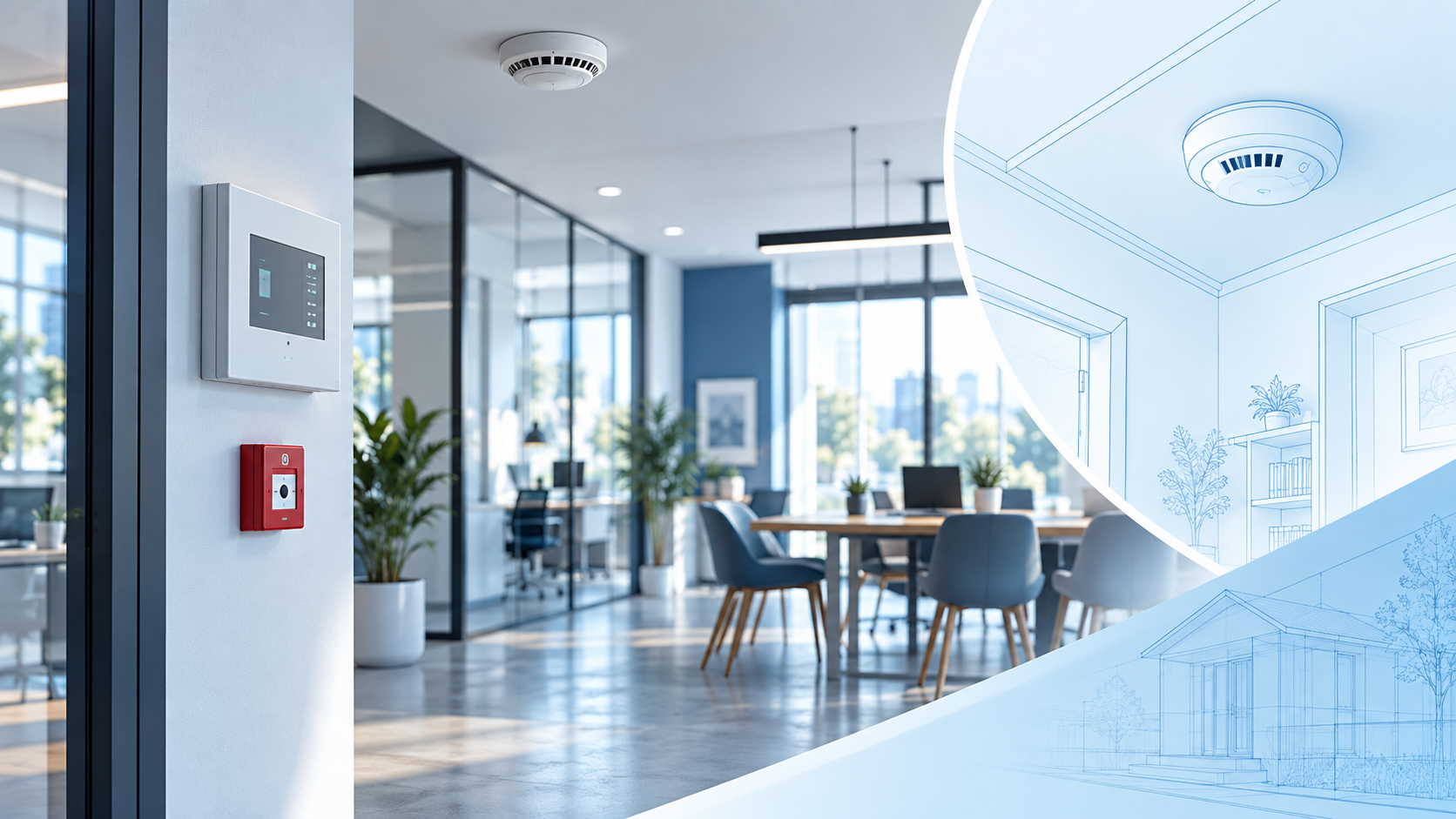
“Fire alarm” can mean several different arrangements. A business may have a system with a control panel, call points and detectors. A home may have individual or interconnected smoke and heat alarms. Describing what you can see is often more useful than trying to name the system.
Look for the visible parts
A fire alarm system may have a control panel showing zones or faults, red manual call points, ceiling detectors and sounders. A smoke or heat alarm is often a smaller ceiling-mounted unit with a test button; some units are linked so they sound together. The presence of one device does not tell the whole story about the building’s fire safety arrangements.
London Fire Brigade explains that smoke alarms respond to smoke, while heat alarms respond to a rapid rise in heat. It recommends heat alarms in kitchens, where cooking can cause unwanted smoke alarm activations. Follow the manufacturer’s instructions and obtain advice for the particular building. See its smoke and heat alarm guidance.
What should you send us?
- A photo of any control panel, including a fault display if one is showing.
- Photos of the alarms or detectors and a note of their locations.
- The make or model, if visible, and any service or installation documents.
- A short description of your concern: new installation, testing, maintenance, false alarms or a fault.
Do not remove a detector or silence a genuine alarm to identify it. If an alarm sounds and there may be a fire, follow the evacuation procedure and call 999.
What happens after you enquire?
We review your description and ask about the property and existing arrangement. For a new design or unclear installation, a site visit may be needed before a recommendation or quotation. If work is agreed, we arrange the visit and provide the relevant report and documentation afterwards. For business premises, the required detection and warning arrangements should be informed by the fire risk assessment; the government’s small business guidance explains that responsibility.
Ask SafeCinder about your alarms
Tell us about your extinguishers or alarms and what you need to know.
Ask Safe Cinder →