
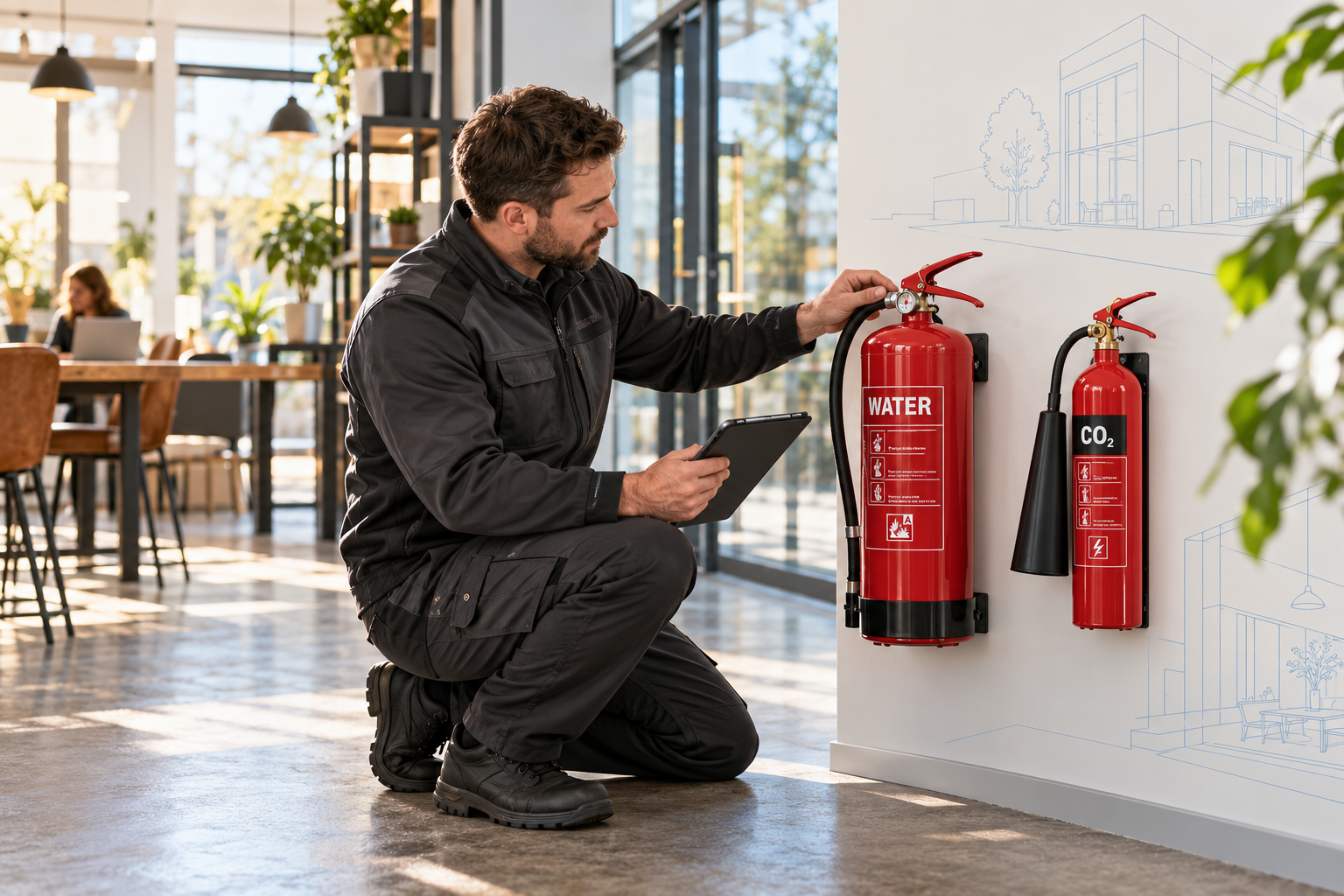
A portable fire extinguisher needs more than a date on a sticker. Its condition, location and suitability should be checked regularly, while different extinguisher types have different deeper-service milestones. Here is a clear way to understand the cycle—and what happens when replacement makes more sense.
What happens at the annual service?
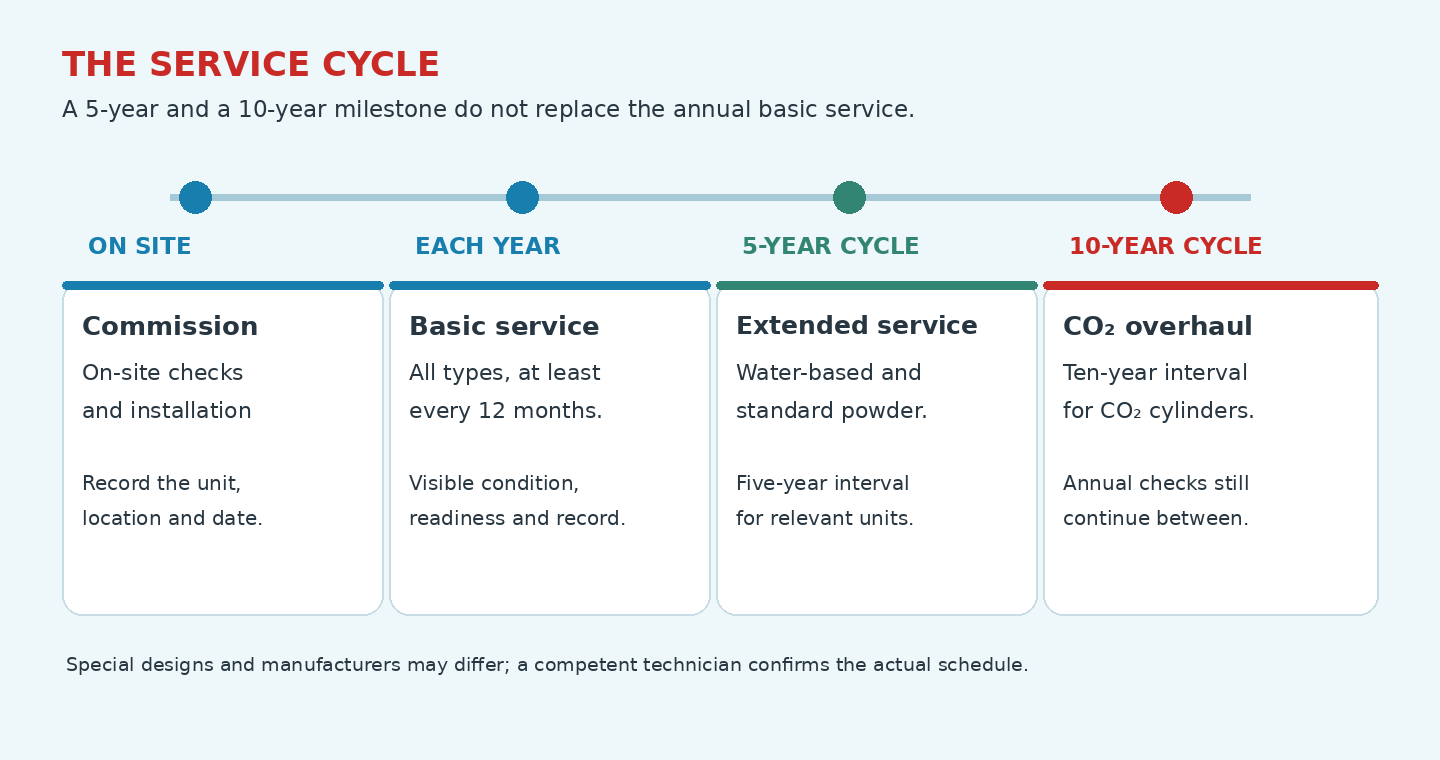
All conventional portable extinguishers, including CO₂, need a basic service at least every 12 months by a competent person. The technician checks the unit, its fittings and position, visible damage or tampering, relevant pressure or weight indications, and whether it still suits the risks in that area. The work and any defects or recommendations are recorded. A CO₂ extinguisher does not wait ten years for its first service.
Between visits, the person responsible for the premises should make a simple visual check at least monthly: is each unit present, accessible, undamaged and apparently ready to use? Report a missing, used or damaged extinguisher promptly rather than waiting for the next annual visit.
What changes at five or ten years?
| Extinguisher | Regular work | Deeper milestone |
|---|---|---|
| Water-based, including foam | Basic service every 12 months | Extended service at a five-year interval |
| Standard powder | Basic service every 12 months | Extended service at a five-year interval |
| Primary-sealed powder | Basic service every 12 months | Extended service at a ten-year interval |
| CO₂ | Basic service every 12 months | Overhaul at a ten-year interval |
An extended service goes beyond the annual external checks. For relevant water-based or powder units it involves work such as discharge, internal examination and recharge, following the applicable procedure. A CO₂ overhaul is a different process involving the cylinder and its periodic test. These are service milestones, not automatic expiry dates: a suitable unit can remain in service if it passes the required work and remains fit for its location.
Is it counted from manufacture or commissioning?
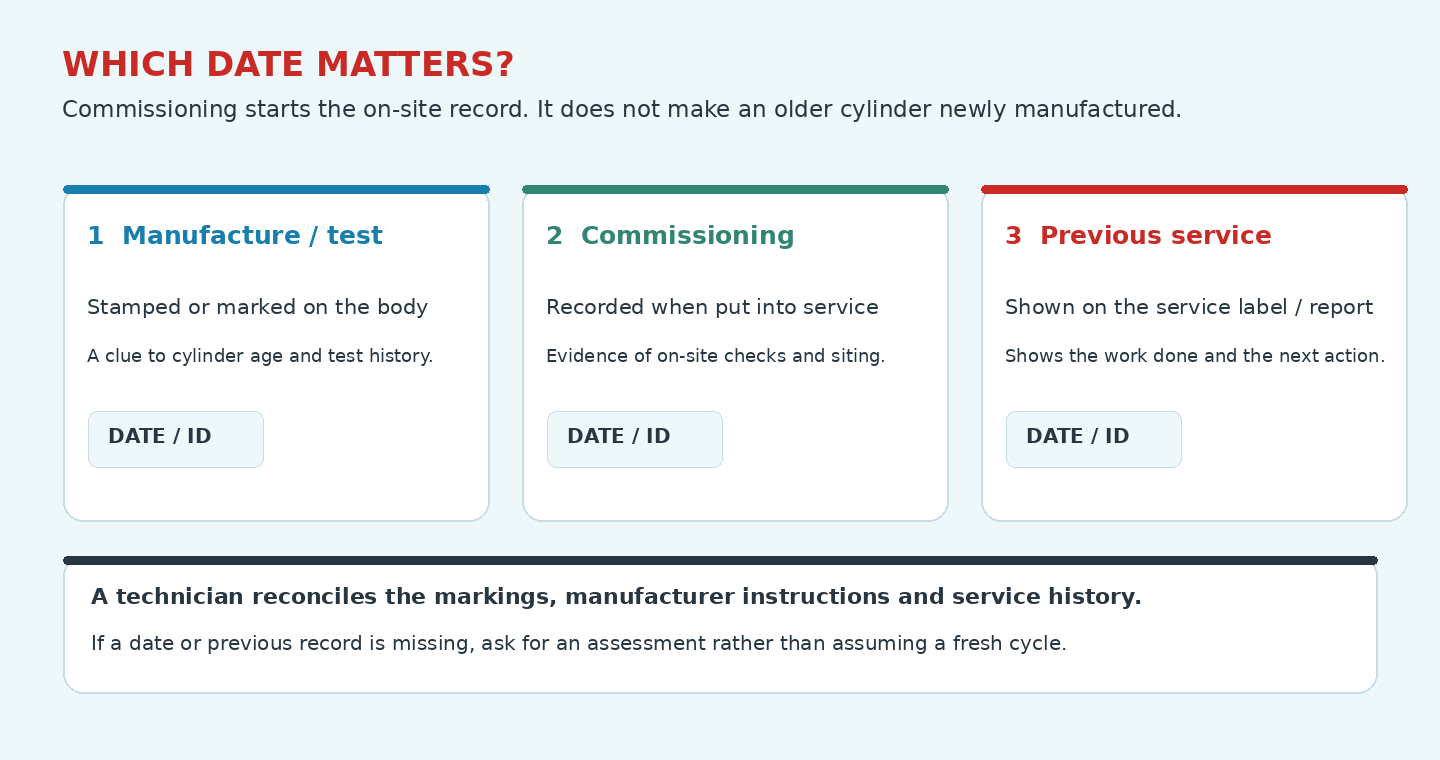
Those dates tell different stories. The body’s manufacture or test marking helps establish the cylinder’s age; the commissioning record shows when it was checked and placed on site; and the service label or report shows subsequent work. Commissioning an older extinguisher does not make its cylinder new. To set the next due date, a technician checks the markings, previous service or test evidence and manufacturer instructions. If records are missing, ask for an assessment rather than assuming a fresh five- or ten-year cycle.
When is replacement the better choice?
At an extended-service or overhaul milestone, the cost of specialist work, transport and temporary cover can exceed the value of a new suitable extinguisher. Damage, corrosion, unavailable parts or a change of risk can also make replacement necessary. We explain the options and recommend the sensible route for your premises. Some units collected after replacement may be suitable for specialist assessment and further work; those that are not must go through an appropriate recovery or disposal route. Never place a pressurised extinguisher in ordinary waste.
Unsure what is due? Tell Safe Cinder about your extinguishers and, if possible, share photos of their front labels, date markings and last service labels. We can review the records and arrange the appropriate next step. You can also read what happens during a service visit.
Further reading: BAFE service intervals and monthly checks; BAFE commissioning and maintenance guidance; FIA on service life and replacement.
Tell us about your extinguishers or alarms and what you need to know.
Ask Safe Cinder →